
Interpretacja zdjęć rentgenowskich łokcia przez AI
Uzyskaj pomoc w zrozumieniu, co pokazuje Twoje zdjęcie rentgenowskie łokcia, w prostym języku. Jasne wyjaśnienia dotyczące kości ramiennej, promieniowej, łokciowej, ustawienia stawów oraz oznak złamania lub wysięku.
Pomagamy tysiącom ludzi zrozumieć wyniki ich zdjęć rentgenowskich łokcia
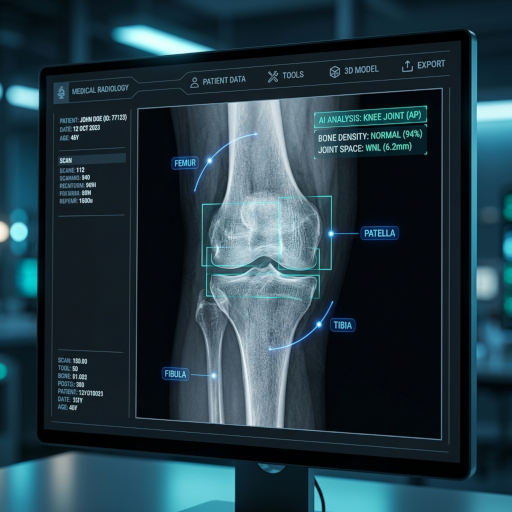
To narzędzie identyfikuje kluczowe struktury na zdjęciach rentgenowskich łokcia i dostarcza prostych wyjaśnień, aby pomóc Ci zrozumieć, co widzisz.
Czym jest interpretacja zdjęcia rentgenowskiego łokcia?
Zdjęcie rentgenowskie łokcia to szybkie, bezbolesne badanie obrazowe, które pokazuje kości tworzące staw łokciowy — kość ramienną, promieniową i łokciową. CT Read pomaga zrozumieć ustawienie kości, powierzchnie stawowe i ważne objawy poduszeczek tłuszczowych w jasnym języku.
Głowa kości promieniowej i bloczek kości ramiennej
Głowa kości promieniowej i bloczek kości ramiennej (dolna część kości ramiennej) tworzą kluczowe połączenie. Subtelne złamania głowy kości promieniowej są częstą przyczyną bólu łokcia po upadku na wyciągniętą rękę.
Wyrostek łokciowy i wyrostek dziobiasty
Wyrostek łokciowy (tył łokcia) i wyrostek dziobiasty (przód) kości łokciowej są oceniane pod kątem złamań i ustawienia, które wpływają na stabilność łokcia.
Objawy poduszeczek tłuszczowych (objaw żagla)
Przemieszczenie przedniej i tylnej poduszeczki tłuszczowej (tzw. „objaw żagla”) jest ważnym pośrednim objawem wysięku w stawie, który często wskazuje na ukryte złamanie u dorosłych.
Ustawienie stawu i tkanki miękkie
Ogólne ustawienie łokcia jest sprawdzane wraz z obrzękiem tkanek miękkich, zwichnięciem lub oznakami zmian artretycznych w stawie.
Interpretacja zdjęcia rentgenowskiego łokcia stała się łatwa
Narzędzie do interpretacji zdjęć rentgenowskich pomaga zrozumieć podstawowe wyniki zdjęć rentgenowskich łokcia, używając prostego języka.
Proste wyjaśnienia dotyczące zdjęcia rentgenowskiego łokcia
Otrzymaj jasne, pozbawione żargonu wyjaśnienia tego, co ujawnia Twoje zdjęcie rentgenowskie łokcia.
Edukacyjny nacisk na anatomię łokcia
Poznaj podstawy anatomii łokcia i typowe wzorce złamań, aby lepiej omawiać wyniki z lekarzem.
Spokój ducha dzięki interpretacji zdjęcia rentgenowskiego łokcia
Zmniejsz niepokój, uzyskując podstawowe zrozumienie wyników zdjęcia rentgenowskiego łokcia, czekając na dalszą opiekę kliniczną.
Jak korzystać z usługi interpretacji zdjęć rentgenowskich łokcia
Cztery proste kroki, aby uzyskać raport interpretacji zdjęcia rentgenowskiego łokcia za pośrednictwem systemu analizy AI:
Prześlij zdjęcie rentgenowskie łokcia
Prześlij obraz rentgenowski łokcia na bezpieczną platformę interpretacyjną. Widoki AP i boczne są najbardziej przydatne.
Przetwarzanie interpretacji przez AI
System AI analizuje obraz, identyfikując możliwe złamania, objawy poduszeczek tłuszczowych lub nieprawidłowości w ustawieniu.
Generuj szczegółową interpretację
System generuje łatwy do zrozumienia raport interpretacyjny zawierający wyniki i wyjaśnienia.
Wyświetl i udostępnij interpretację
Wyświetl wyniki i opcjonalnie bezpiecznie udostępnij raport swojemu lekarzowi.
Zrozum swoje zdjęcie rentgenowskie łokcia
Prześlij obraz rentgenowski łokcia, aby uzyskać łatwe do zrozumienia wyjaśnienie
RTG, CT, MRI, USG
Jakie schorzenia może wykryć zdjęcie rentgenowskie łokcia?
Standardowe zdjęcia rentgenowskie łokcia w projekcjach AP i bocznej oceniają dalszą część kości ramiennej, bliższą część kości promieniowej i łokciowej oraz trzy stawy stawu łokciowego. „Objaw poduszeczki tłuszczowej” na zdjęciu rentgenowskim bocznym jest jednym z najbardziej czułych objawów w całej radiologii układu mięśniowo-szkieletowego.
Złamanie głowy kości promieniowej (najczęstsze złamanie łokcia u dorosłych)
Często subtelne w projekcji AP — szukaj schodka korowego i uniesionego przedniego lub tylnego objawu poduszeczki tłuszczowej w projekcji bocznej, co wskazuje na wysięk w stawie z ukrytego złamania.
Złamanie nadkłykciowe (najczęstsze złamanie łokcia u dzieci)
U dzieci przednia linia ramienna i kąt Baumanna oceniane na zdjęciu rentgenowskim pomagają wykryć subtelne złamania nadkłykciowe, które mogą zagrozić tętnicy ramiennej w przypadku przemieszczenia.
Złamanie wyrostka łokciowego i zwichnięcie łokcia
Tylne zwichnięcie łokcia jest najczęstszym zwichnięciem dużego stawu u dorosłych. Zdjęcie rentgenowskie potwierdza zwichnięcie, identyfikuje związane z nim złamania wyrostka dziobiastego lub głowy kości promieniowej („straszna triada”) i potwierdza nastawienie.
Zapalenie nadkłykcia bocznego („łokieć tenisisty”) i zapalenie nadkłykcia przyśrodkowego („łokieć golfisty”)
Chociaż jest to głównie diagnoza tkanek miękkich, zdjęcie rentgenowskie pomaga wykluczyć przyczyny kostne i może wykazać zwapnienia w miejscu wspólnego przyczepu prostowników lub zginaczy w przypadkach przewlekłych.
Choroba zwyrodnieniowa stawu łokciowego i ciała wolne
Zdjęcie rentgenowskie pokazuje zwężenie szpary stawowej, osteofity brzeżne (zwłaszcza w dole wyrostka łokciowego) i wewnątrzstawowe ciała wolne, które mogą powodować blokowanie.
Dziecięce centra kostnienia (CRITOE)
Sześć centrów kostnienia łokcia pojawia się w określonej kolejności (główka kości ramiennej, głowa kości promieniowej, nadkłykieć przyśrodkowy, bloczek, wyrostek łokciowy, nadkłykieć boczny). Interpretacja zdjęć rentgenowskich u dzieci wymaga znajomości tych wieków, aby uniknąć pomylenia niezrośniętych centrów ze złamaniami.
Kiedy należy wykonać zdjęcie rentgenowskie łokcia?
Zdjęcia rentgenowskie łokcia są zlecane w przypadku prawie każdego ostrego urazu lub uporczywego problemu z łokciem.
- 1
Ostry uraz łokcia — upadki, sport lub bezpośrednie uderzenie
Zdjęcie rentgenowskie jest wskazane w przypadku obrzęku, deformacji, niemożności pełnego wyprostu lub znacznej tkliwości po urazie. Sam objaw poduszeczki tłuszczowej wystarczy, aby uzasadnić skierowanie do ortopedy.
- 2
Dziecięcy „łokieć pociągnięty” lub upadek na wyciągniętą rękę
U dzieci poniżej 8 roku życia złamania nadkłykciowe i złamania kłykcia bocznego są częste i mogą być subtelne. Zdjęcie rentgenowskie z projekcjami porównawczymi przeciwnego łokcia jest standardowym badaniem pierwszego rzutu.
- 3
Przewlekły ból boczny lub przyśrodkowy łokcia (zapalenie nadkłykcia)
Zdjęcie rentgenowskie jest używane do wykluczenia zapalenia stawów, zwapnień lub zmian przeciążeniowych u pacjentów z uporczywym bólem, który nie reaguje na leczenie zachowawcze.
- 4
Blokowanie, przeskakiwanie lub ograniczenie zakresu ruchu
Te objawy mechaniczne sugerują ciała wolne, martwicę kostno-chrzęstną rozwarstwiającą lub zaawansowaną chorobę zwyrodnieniową stawów — wszystkie widoczne na zdjęciu rentgenowskim.
- 5
Kontrola pooperacyjna lub po nastawieniu
Po zespoleniu złamania lub nastawieniu zwichnięcia zdjęcia rentgenowskie potwierdzają ustawienie, położenie sprzętu i postęp gojenia.
Zdjęcie rentgenowskie łokcia vs MRI vs CT vs USG
Zdjęcie rentgenowskie jest prawie zawsze pierwszym badaniem obrazowym, ale ocena tkanek miękkich i złożonych struktur kostnych wymaga dodatkowych badań.
| Metoda obrazowania | Najlepiej pokazuje | Ograniczenia | Koszt i dostępność |
|---|---|---|---|
| Zdjęcie rentgenowskie łokcia | Złamania, zwichnięcia, objaw poduszeczki tłuszczowej, zapalenie stawów, ciała wolne, kostnienie u dzieci | Nie widać więzadła pobocznego łokciowego (UCL), ścięgien, chrząstki | Najniższy koszt; szybkie wyniki |
| Rezonans magnetyczny łokcia | Zerwania UCL (uraz Tommy'ego Johna), tendinopatia, zmiany OCD, ukryte złamania | Długi czas skanowania; drogie | Wysoki koszt |
| Tomografia komputerowa łokcia | Złożone złamania wewnątrzstawowe, planowanie operacji, ocena sprzętu pooperacyjnego | Wyższe promieniowanie; brak szczegółów tkanek miękkich | Średnio-wysoki koszt |
| USG łokcia | Ocena UCL pod obciążeniem, tendinopatia wspólnego prostownika, wysięk w stawie, iniekcje pod kontrolą USG | Zależne od operatora; nie może oceniać głębokich kości | Niski koszt, brak promieniowania |
Jak przygotować się do zdjęcia rentgenowskiego łokcia
Zdjęcia rentgenowskie łokcia nie wymagają prawie żadnego przygotowania, ale kilka szczegółów poprawia jakość obrazu.
Załóż koszulkę z krótkim rękawem lub bez rękawów
Ramię musi być odsłonięte od ramienia do dłoni w celu prawidłowego ułożenia w projekcjach AP i bocznej.
Zdejmij zegarki, bransoletki i biżuterię z ramienia
Artefakty metalowe mogą zasłaniać subtelne linie złamań lub poduszeczki tłuszczowe.
Poinformuj technika o wszelkich starych implantach lub elementach metalowych
Płytki, śruby lub druty z poprzedniej operacji powinny być udokumentowane w zleceniu.
Ułóż ramię dokładnie tak, jak zalecono
Prawdziwa projekcja boczna (zgięcie 90°, kciuk do góry, wiązka równoległa do nadkłykci kości ramiennej) jest niezbędna do wykrycia objawu poduszeczki tłuszczowej — niewłaściwe ułożenie może ukryć złamanie głowy kości promieniowej.
Ograniczenia interpretacji zdjęć rentgenowskich łokcia przez AI
Zdjęcie rentgenowskie i AI nie mogą zastąpić badania klinicznego i zaawansowanego obrazowania w wielu scenariuszach.
- Zerwania więzadeł i ścięgien są niewidoczne: Zerwania UCL (Tommy John), zerwania dystalnego bicepsa i zerwania tricepsa wymagają MRI lub USG. Normalny raport AI nie wyklucza tych urazów.
- Interpretacja pediatryczna wymaga wiedzy specjalistycznej: Niezrośnięte centra kostnienia u dzieci mogą naśladować złamania i odwrotnie. Zawsze potwierdzaj wyniki AI u dzieci z radiologiem dziecięcym lub specjalistą ortopedą.
- Subtelne złamania głowy kości promieniowej są łatwe do przeoczenia: Objaw poduszeczki tłuszczowej jest jedynym objawem rentgenowskim w nawet 25% złamań głowy kości promieniowej. Każda osoba z urazem łokcia i dodatnim objawem poduszeczki tłuszczowej powinna być leczona tak, jakby miała złamanie, nawet jeśli nie widać linii.
Interpretacja zdjęć rentgenowskich łokcia przez AI CT Read służy wyłącznie celom edukacyjnym. Zawsze konsultuj się z chirurgiem ortopedą w sprawie decyzji dotyczących leczenia.