
KI-gestützte Hand- und Handgelenks-Röntgeninterpretation
Erhalten Sie Hilfe, um zu verstehen, was Ihr Hand- oder Handgelenks-Röntgenbild in einfacher Sprache zeigt. Klare Erklärungen der Handwurzelknochen, Mittelhandknochen, Fingerknochen und Gelenke – einschließlich möglicher Frakturen, Arthritis oder Ausrichtungsprobleme.
Tausenden von Menschen helfen, ihre Hand- und Handgelenks-Röntgenbefunde zu verstehen
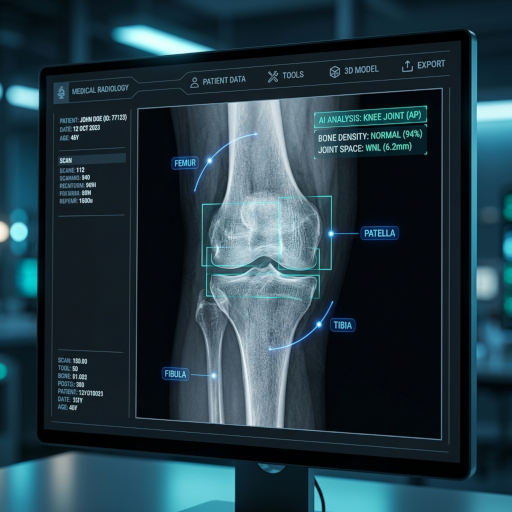
Dieses Tool identifiziert Schlüsselstrukturen in Hand- und Handgelenks-Röntgenbildern und bietet einfache Erklärungen, um Ihnen zu helfen, zu verstehen, was Sie sehen. Laden Sie Ihr Röntgenbild hoch, um es selbst auszuprobieren.
Was ist eine Hand- und Handgelenks-Röntgeninterpretation?
Eine Hand- oder Handgelenks-Röntgenaufnahme ist eine schnelle, strahlungsarme Bildgebung, die die Knochen der Finger, der Handfläche und des Handgelenks sichtbar macht. CT Read hilft Ihnen, die Handwurzelknochen, Mittelhandknochen, Fingerknochen und Gelenkspalten in klarer, leicht verständlicher Sprache zu verstehen.
Handwurzelknochen (Handgelenk)
Die acht kleinen Handwurzelknochen des Handgelenks werden beurteilt, mit besonderem Augenmerk auf das Kahnbein – den am häufigsten gebrochenen Handgelenksknochen, der oft bei ersten Röntgenaufnahmen übersehen wird.
Mittelhandknochen und Fingerknochen
Die langen Knochen der Handfläche (Mittelhandknochen) und Fingerknochen (Fingerknochen) werden auf Frakturen, Luxationen oder Anzeichen von entzündlicher Arthritis untersucht.
Gelenkspalten und Arthritiszeichen
Handgelenks- und Fingergelenkspalten werden auf Verengungen, Erosionen oder Knochensporne untersucht, die auf Osteoarthritis, rheumatoide Arthritis oder Psoriasis-Arthritis hinweisen können.
Weichteilschwellung und Fremdkörper
Umgebende Weichteile werden auf Schwellungen, Gas oder röntgendichte Fremdkörper (z. B. Glas oder Metall) untersucht, die ein Trauma begleiten können.
Hand- und Handgelenks-Röntgeninterpretation leicht gemacht
Das Röntgeninterpretations-Tool hilft Ihnen, grundlegende Hand- und Handgelenks-Röntgenbefunde in einfacher Sprache zu verstehen, ohne medizinisches Wissen zu erfordern.
Einfache Erklärungen für Hand-/Handgelenks-Röntgenbilder
Erhalten Sie klare, jargonfreie Erklärungen dessen, was Ihr Hand- oder Handgelenks-Röntgenbild zeigt.
Bildungsschwerpunkt auf Hand-/Handgelenksanatomie
Lernen Sie die Grundlagen der Handwurzelanatomie, Gelenkspalten und häufiger Frakturmuster, um Befunde besser mit Ihrem Arzt besprechen zu können.
Seelenfrieden mit der Hand-/Handgelenks-Röntgeninterpretation
Reduzieren Sie Ängste, indem Sie ein grundlegendes Verständnis Ihrer Hand- oder Handgelenks-Röntgenbefunde erlangen, während Sie auf eine klinische Meinung warten.
So nutzen Sie den Hand- und Handgelenks-Röntgeninterpretationsdienst
Vier einfache Schritte, um einen Hand- oder Handgelenks-Röntgeninterpretationsbericht über das KI-Analysesystem zu erhalten:
Hand- oder Handgelenks-Röntgenbild hochladen
Laden Sie Ihr Hand- oder Handgelenks-Röntgenbild auf die sichere Interpretationsplattform hoch. PA-, Schräg- und Seitenansichten werden alle unterstützt.
KI-Interpretationsverarbeitung
Das KI-System analysiert das Bild schnell und identifiziert potenzielle Frakturen, Arthritiszeichen oder Ausrichtungsanomalien.
Detaillierte Interpretation erstellen
Das System erstellt einen leicht verständlichen Interpretationsbericht mit Befunden, Erklärungen und visuellen Markierungen.
Interpretation ansehen und teilen
Zeigen Sie die Ergebnisse an und teilen Sie den Bericht optional sicher mit Ihrem Arzt oder Therapeuten.
Verstehen Sie Ihr Hand- oder Handgelenks-Röntgenbild
Laden Sie Ihr Hand- oder Handgelenks-Röntgenbild hoch, um eine leicht verständliche Erklärung zu erhalten
Röntgen, CT, MRT und Ultraschall
Was kann ein Hand- oder Handgelenks-Röntgenbild erkennen?
PA- (posteroanteriore), schräge und seitliche Ansichten der Hand und des Handgelenks ermöglichen eine detaillierte Beurteilung aller 27 Knochen, Gelenkspalten und des umgebenden Weichteilgewebes. Es ist die primäre Bildgebung bei Handtraumata, Arthritis und vielen angeborenen Erkrankungen.
Distale Radiusfrakturen (Colles-Frakturen)
Die häufigste Fraktur bei Erwachsenen, meist durch einen Sturz auf die ausgestreckte Hand (FOOSH). Das Röntgenbild zeigt eine dorsale Angulation, eine Verkürzung des Radius und eine Beteiligung des Ulnastyloids, die die Entscheidung zwischen Gipsverband und chirurgischer Fixation leiten.
Kahnbeinfrakturen
Das Kahnbein ist der am häufigsten gebrochene Handwurzelknochen und einer der am häufigsten übersehenen. Achten Sie auf kortikale Unterbrechungen in der Taille; wenn das Röntgenbild negativ ist, aber der klinische Verdacht bestehen bleibt, ist ein MRT oder eine Wiederholungs-Röntgenaufnahme nach 10–14 Tagen aufgrund des Risikos einer avaskulären Nekrose unerlässlich.
Boxerfraktur (5. Mittelhandhals)
Häufig nach einem Faustschlag, mit volarer Angulation des Mittelhandkopfes. Der Grad der Angulation bestimmt, ob eine geschlossene Reposition oder eine chirurgische Fixation erforderlich ist.
Rheumatoide Arthritis (RA)
Das Röntgenbild zeigt eine symmetrische Gelenkspaltverengung der MCP- und PIP-Gelenke, marginale Erosionen, periartikuläre Osteopenie und Ulnardeviation. Der Sharp/van der Heijde-Score wird aus PA-Handfilmen berechnet.
Arthrose der Daumenbasis (CMC OA) und DIP-Gelenke
Das 1. CMC-Gelenk und die DIP-Gelenke (Heberden-Knoten) sind am häufigsten von Hand-OA betroffen. Das Röntgenbild zeigt Gelenkspaltverengung, Osteophyten und Subluxation der Daumenbasis.
Fremdkörper und Weichteilbefunde
Glas-, Metall- und Kiesfragmente sind röntgendicht und leicht sichtbar. Weichteilschwellungen, Gas und Verkalkungen (z. B. Kalziumpyrophosphat-Erkrankung) werden ebenfalls auf einfachen Röntgenbildern dokumentiert.
Wann ist eine Hand- oder Handgelenks-Röntgenaufnahme erforderlich?
Hand-/Handgelenks-Röntgenbilder werden bei fast jeder akuten Verletzung, anhaltenden Gelenkschmerzen oder vermuteter systemischer Arthritis, die die Hände betrifft, angeordnet.
- 1
Akutes Trauma – Stürze, Sport- oder Schlagverletzungen
Wenn nach einem Trauma Schwellungen, Deformitäten, Blutergüsse oder Druckempfindlichkeit über einem Knochen auftreten, wird ein Röntgenbild angeordnet, um Frakturen, Luxationen oder Bandabriss auszuschließen.
- 2
Anhaltende Handgelenkschmerzen, insbesondere in der Tabatiere
Druckempfindlichkeit in der Tabatiere nach einem FOOSH deutet auf eine Kahnbeinfraktur hin und erfordert eine Bildgebung, auch wenn das erste Röntgenbild negativ ist.
- 3
Chronische Gelenkschmerzen, Schwellungen oder Morgensteifigkeit
Bilaterale, symmetrische Handschmerzen mit Steifigkeit, die morgens länger als eine Stunde anhält, deuten auf eine entzündliche Arthritis (RA oder Psoriasis) hin. PA-Handfilme sind Teil der diagnostischen Abklärung.
- 4
Verminderte Griffstärke oder sichtbare Deformität
Knopfloch-, Schwanenhals-, Ulnardeviation oder Daumenbasis-Subluxation werden auf dem Röntgenbild dokumentiert, um den Schweregrad zu beurteilen und die Schienung oder Operation zu planen.
- 5
Verdacht auf Fremdkörper nach Schnitt- oder Stichverletzung
Röntgenbilder erkennen praktisch alle Metall- und Glasfragmente und sind routinemäßig vor der Wundexploration.
Hand-/Handgelenks-Röntgen vs. MRT vs. CT vs. Ultraschall
Röntgen ist schnell, günstig und hervorragend für Knochen, aber Weichteilfragen erfordern andere Bildgebung.
| Bildgebendes Verfahren | Am besten geeignet für die Darstellung von | Einschränkungen | Kosten & Zugang |
|---|---|---|---|
| Hand-/Handgelenks-Röntgen | Frakturen, Luxationen, Arthritis-Graduierung, Knochenausrichtung, Fremdkörper | Übersieht viele Bänderrisse, TFCC-Verletzungen, frühe RA und kleine Kahnbeinfrakturen | Geringste Kosten, in jeder Notaufnahme oder Notfallpraxis verfügbar |
| Hand-/Handgelenks-MRT | Skapholunäre Bänderrisse, TFCC-Verletzungen, frühe RA-Synovitis, Knochenmarködem, okkulte Frakturen | Teuer; lange Scanzeit; nicht immer dringend verfügbar | Hohe Kosten; längere Wartezeiten |
| Hand-/Handgelenks-CT | Komplexe Handwurzelfrakturen, intraartikuläre Frakturen, Operationsplanung, Verdacht auf Pseudarthrose | Höhere Strahlung; keine Weichteildetails | Mittlere bis hohe Kosten |
| Hand-/Handgelenks-Ultraschall | Sehnenrisse, Ganglionzysten, RA-Synovitis, gezielte Injektionen | Operatorabhängig; kann tiefe Knochen nicht beurteilen | Geringe Kosten, keine Strahlung |
So bereiten Sie sich auf eine Hand- oder Handgelenks-Röntgenaufnahme vor
Es ist keine besondere Vorbereitung erforderlich. Ein paar kleine Schritte verbessern die Bildqualität und die Genauigkeit der KI-Interpretation.
Entfernen Sie jeglichen Schmuck, Uhren und Ringe
Metallobjekte erscheinen auf Röntgenbildern hellweiß und können wichtige Befunde verdecken. Einige Bildgebungszentren akzeptieren temporäres Klebeband über Ringen, wenn das Entfernen aufgrund von Schwellungen unmöglich ist.
Informieren Sie den Techniker über frühere Frakturen oder Operationen
Platten, Schrauben, K-Drähte und alte verheilte Frakturen können eine akute Verletzung vortäuschen. Die Kenntnis der Anamnese ermöglicht es dem Radiologen (und der KI), sich auf neue Befunde zu konzentrieren.
Positionieren Sie die Hand genau nach Anweisung
Standard-PA-, Schräg- und Seitenansichten erfordern eine präzise Positionierung. Eine falsche Rotation kann eine Kahnbeinfraktur verdecken oder Gelenkspaltmessungen verzerren.
DICOM-Dateien für die KI-Analyse mitbringen
CT Read liefert die beste Interpretation, wenn die ursprüngliche DICOM-Datei anstelle eines Screenshots verwendet wird, da die Graustufenauflösung und der Knochenfensterkontrast erhalten bleiben.
Einschränkungen der KI-Hand- und Handgelenks-Röntgeninterpretation
Die KI ist als Triage- und Schulungstool gedacht. Mehrere häufige Pathologien sind auf einfachen Röntgenbildern von Natur aus schwer oder unmöglich zu erkennen.
- Okkulte Kahnbeinfrakturen: Bis zu 30 % der echten Kahnbeinfrakturen sind auf Röntgenbildern am ersten Tag nicht sichtbar. Jeder mit Druckempfindlichkeit in der Tabatiere sollte geschient und nach 10–14 Tagen erneut bildgebend untersucht werden, unabhängig vom KI-Ergebnis.
- Band- und Sehnenverletzungen: Skapholunäre Dissoziationen, TFCC-Risse und Sehnenrupturen erfordern oft MRT oder Ultraschall; Röntgen und KI können in ihrer Anwesenheit "normal" erscheinen.
- Frühe entzündliche Arthritis: Knochenerosionen bei RA können 6–12 Monate dauern, bis sie auf dem Röntgenbild sichtbar werden. Ein normaler KI-Bericht schließt eine frühe RA nicht aus – klinische Untersuchung und Laborwerte (Anti-CCP, RF) bleiben unerlässlich.
Die CT Read KI-Hand- und Handgelenks-Röntgeninterpretation dient ausschließlich zu Bildungszwecken. Bestätigen Sie abnormale Befunde immer mit einem qualifizierten Handchirurgen oder Radiologen.